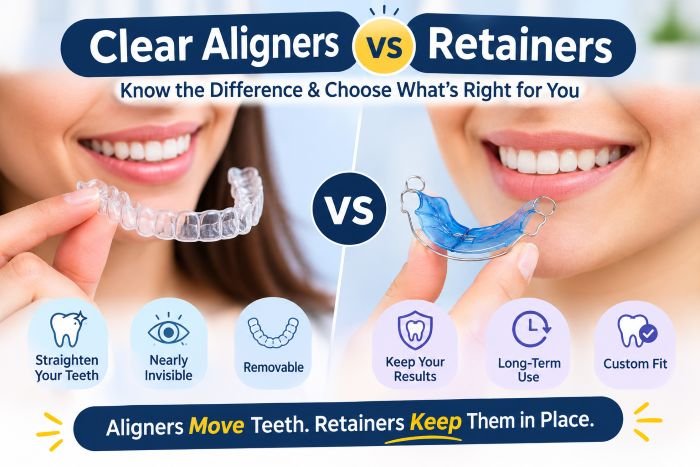
Clear aligners and clear retainers can look almost identical: thin, transparent plastic trays that fit snugly over your teeth. But they do very different jobs. One moves teeth; the other keeps them where they are. Mixing them up can lead to wasted money or disappointing results.
What are clear aligners?
Clear aligners are a series of custom-made trays used to straighten teeth. Each set is slightly different from the last and applies gentle pressure to move teeth a small amount. You switch to a new set every one to two weeks, following a treatment plan created by a dentist or orthodontist.
They’re used for problems like crowding, gaps and some bite issues, and usually need to be worn around 20–22 hours a day. For a fuller explanation, see what invisible braces are and whether they’re worth it.
What are retainers?
Retainers are used after orthodontic treatment to hold teeth in their new positions. Teeth naturally tend to drift back, especially in the first months after braces or aligners end. Retainers don’t move teeth; they keep them stable.
Types of retainers
- Clear removable retainers: look like aligners but are made to hold, not move.
- Wire (Hawley) retainers: removable, with a wire across the front teeth and an acrylic base.
- Fixed (bonded) retainers: a thin wire glued behind the front teeth, worn permanently.
Side-by-side comparison
| Feature | Clear aligners | Retainers |
|---|---|---|
| Purpose | Move teeth | Keep teeth in place |
| When used | During treatment | After treatment |
| Number of trays | Many (a series) | Usually one set |
| Wear time | 20–22 hours a day | Often full-time at first, then nights |
| Duration | Months | Often years, sometimes long-term |
Can a retainer straighten teeth?
Not meaningfully. A retainer may correct very slight shifting if worn consistently soon after it happens, but it isn’t designed to move teeth. If your teeth have shifted noticeably, you may need a short course of aligners first, then a new retainer.
How long do you need to wear a retainer?
Many orthodontists recommend full-time wear for the first few months after treatment, then nightly wear for an extended period, often indefinitely. Teeth can shift throughout life, so long-term retainer use is the best way to protect your results.
Caring for aligners and retainers
- Rinse them every time you remove them
- Clean gently with a soft brush and mild soap; avoid hot water, which can warp plastic
- Store in a case, never wrapped in a tissue (a common way they get thrown away)
- Keep away from pets, which often chew them
- Brush your teeth before putting trays back in
Frequently asked questions
Are aligners more expensive than retainers? Yes, considerably, because they involve a full treatment plan and many trays. Retainers are a smaller, follow-up cost.
What happens if I stop wearing my retainer? Teeth can gradually move back towards their original positions, undoing some of your treatment.
Can I eat with aligners or retainers in? Removable ones should be taken out for eating and most drinks other than water.
Final thoughts
Aligners create a new smile; retainers protect it. If you’re considering treatment, plan and budget for both, and follow your orthodontist’s retainer instructions to make the results last.
This article is general information and not dental advice. Consult a qualified dentist or orthodontist.